News: Lost and Found

Lost and Found July 2022

Are you missing any of these items? Call the church office at 907 209-8185.

Two beautiful coats have been hanging in the Fellowship Hall for a while this summer. A couple hats have been at the church for a long time.

Quite a few children’s items were left at the conclusion of CDF Freedom Schools®.

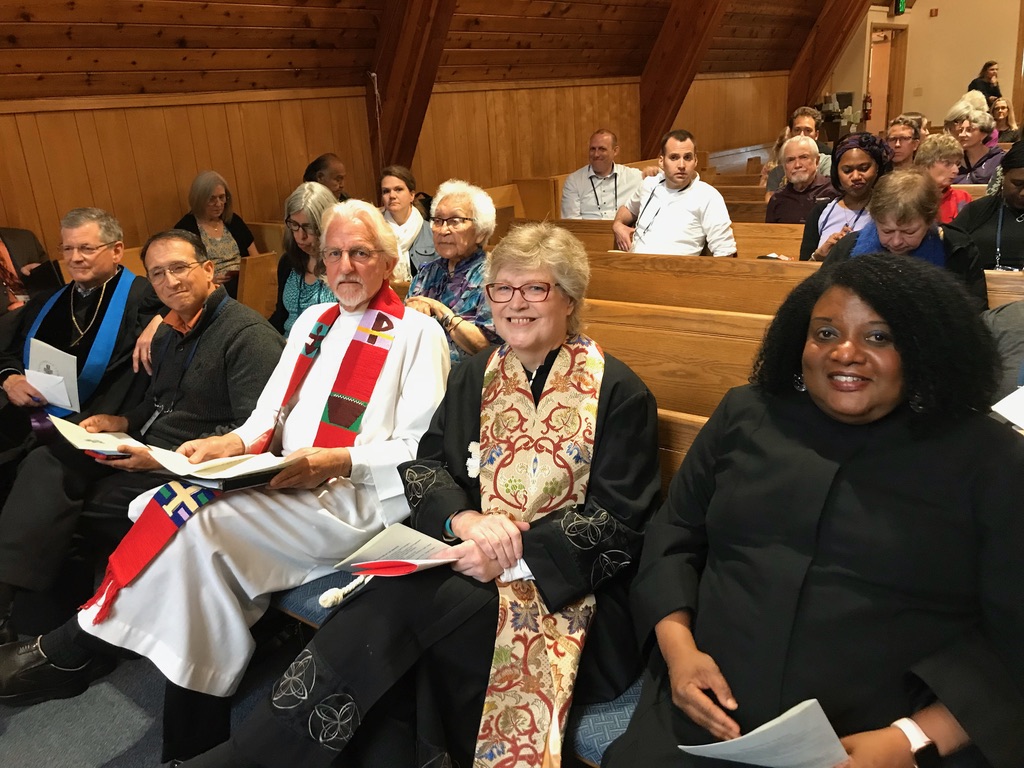
Here’s some photos. Do you recognize any item of clothing?

Mountain Hardwear Jacket Women’s Large

Todd River British Columbia Sweatshirt Large

David & Young Hat

Knit Cap

Cups

Batman Top Small

Star Sweatshirt Small

Denim Jacket Small

Old Navy Jacket Small

Child Top Small

News Recorded Sermons

Do you want to view a Sunday worship service from Ḵunéix̱ Hídi Northern Light United Church? Or would you like to watch or re-watch the sermon? You can easily find these on our website, https://nluchurch.org.

Check out WORSHIP, then click on Recorded Services or Recorded Sermons. 

View Ḵunéix̱ Hídi Northern Light United Church’s Recorded Services: Recorded Services

View Sunday Sermons: Recorded Sermons

We’ve posted these sermons in addition to the entire worship service:

Sermon, July 17, 2022, with Bob Coghill

Sermon, July 10, 2022, with Rev. Dr. Paul Beran

Sermon, July 3, 2022, with Rev. Dr. Paul Beran

Sermon, June 26, 2022, with Rev. Kristi McGuire

Sermon, June 19, 2022, with John Pugh

Sermon, June 12, 2022, with Bob Coghill

Sermon, June 5, 2022, with George Partlow

Sermon, May 29, 2022, with Sasha Soboleff

Sermon, May 22, 2022, with Dori Germain

Sermon, May 15, 2022, with Rev. Kristi McGuire

Sermon, May 8, 2022, with Paul Marks

Sermon, May 1, 2022, with Rev. Faith McClellan

Thanks to the Staff Parish Relations Committee for arranging our Pulpit Supply and thanks to all our visiting preachers for sharing the Word with us!

SJSC Proposed Motion on positions on Ukraine and global refugee crisis

Social Justice and service Committee Meeting July 21, 12noon-1pm

Suggested language for motion to Council

Preamble

The world is experiencing multiple global crises due to wars, famine, pandemics, and global climate change, all creating untold suffering and death. Mass displacement of humans is taxing the resources needed to respond to the resulting humanitarian needs.

We are a wealthy nation and people and are called by our faiths to welcome the refugees to our community. This requires us to share our wealth and be advocates for just and generous treatment of these strangers.

We must also be a voice and a force for diplomacy and non-violent responses to violence, in all its forms.

This is a challenge of epic proportions, but it is at the heart of our Christian faith.

Our immediate opportunity is in response to Ukrainian refugees coming to Juneau. A more comprehensive and discerned response requires church and community conversation.

We therefore recommend to Council this motion,

  1. Work cooperatively with other communities of faith – specifically Congregation Sukkat Shalom (fiscal agent for current refugees), Douglas and Aldersgate United Methodist congregations, and other faith groups and community members, to raise $50,000, by January 2023 for housing and transportation support for two or more Ukrainian families.
  2. Help our congregation and the wider community understand the dimensions and needs of the current crisis.
  3. Council endorses a process that leads to a Kuneix Hidi NLUC policy that responds to the growing refugee crisis.

Background

UMC and PCUSA Statements on Ukrainian and Global Crisis

UMC – “Global migration is a phenomenon impacting countries around the world at historic highs. Anti-immigrant rhetoric, attitudes, and actions are turning communities into places of inhospitality and exclusion on local and national levels.

The United Methodist Church upholds practicing hospitality to immigrants, refugees, and asylees without regard to race, status, nationality, or religion. We affirm that all people, regardless of country of origin, are members of the family of God

United Methodists understand that “at the center of Christian faithfulness to Scripture is the call we have been given to love and welcome the sojourner. We call upon all United Methodist churches to welcome newly arriving migrants in their communities, to love them as we do ourselves, to treat them as one of our native-born, to see in them the presence of the incarnated Jesus, and to show hospitality to the migrants in our midst, believing that through their presence we are receiving the good news of the gospel of Jesus Christ.”

United Methodists focus on three priorities in immigration: welcoming the stranger, human rights and keeping families together.”

PCUSA –

“ACT: Urge the U.S. government to support generous aid for refugees and civilians suffering in Ukraine and call for engaging a diplomatic solution to the conflict.

PRAY: May we undergird our prayers with tangible resources to help. May we reach deeply, give generously, and welcome extravagantly. May we lift our voices in a strong and unified advocacy. May we all, even as we breathe in lament, breathe out mercy, hope and peace. And in this Lenten season, when we walk the way toward death and resurrection, repent our complicity in cultures of violence and renew our efforts toward justice and peace.”

Comments on Overture

[RGJ-09]On Directing the Office of the General Assembly to Issue Apologies and Reparations for the Racist Closure of the Memorial Presbyterian Church, Juneau, Alaska

Comment—From the Special Committee on Racism Truth and Reconciliation

The Reverend Paul Timothy Roberts Sr., President of Johnson C. Smith Theological Seminary, shared with the Special Committee on Racism Truth and Reconciliation that the time for decisive action is now – we (the church) need “to put our feet in the street” and move beyond study and report generation. History reveals opportunities where the church has failed to take notice of the call to turn away from the sin of racism and turn toward God’s call to apologize, acknowledge, and confess the wounds inflicted on our Alaskan Native siblings in Christ. This is a turning point moment; a call to recognize and respond to the call for atonement, repentance, and repair.  As long as White supremacy is not addressed in our church, our institutional health and representation as the Body of Christ is at stake.

Advice and Counsel—From the Racial Equity Advisory Committee (REAC)

The Racial Equity Advocacy Committee (REAC) recommends the 225th General Assembly (2022) approve RGJ-09.

This overture takes important steps toward transformative repentance supported by reparative action. It serves as a model for confronting the sins of our racism as a denomination by not only speaking the truth and apologizing for our violent actions, but also by seeking to begin some semblance of repair with tangible action. As noted in this overture in reference to RGJ-07 from REAC, the PC(USA) has much work to do with regards to confronting and addressing the continued effects of our racism on siblings of color. The actions proposed in this overture serve as a solid first step in the PC(USA) making reparations toward Indigenous siblings. We pray there will be many more movements following the lead of this overture.

Comment—From the Presbyterian Mission Agency (PMA)

Recommendation 2dDirect the Presbyterian Mission Agency to donate $300,000, in the name of Memorial Presbyterian Church, to the Presbyterian Foundation Native American Church Property Fund, and urge presbyteries and congregations of the PC(USA) also to donate in the name of Memorial Presbyterian Church or present and past churches of other Native Americans and other people of color important to them.

The Presbyterian Mission Agency (PMA) is grateful for the obvious care, prayer, and deep research that has gone into the construction of this overture. We also note with gratitude that the current Northern Light United Church and Presbytery of the Northwest Coast are proactively engaged in partnership to address the difficulty that is still present from the closure and merger of Memorial PC into Northern Light United Church. In particular we celebrate the remarkable commitment made by Northern Light United Church through their congregational resolution on repair which is part of the rationale. This is a just, imaginative, comprehensive approach to repair and can be a model for others seeking to repair a similar historical harm.

The PMA Board has authorized formation of the Center for Repair of Historical Harm (Center for Repair), in cooperation with OGA and ASG for the express purpose of ministering together with mid-councils, congregations, domestic and international partners in the ministry of repair and reconciliation from the sins of structural racism and white supremacist ways of being.  PMA knows we are entering a season in which the spiritual integrity of the future church depends on repairing the past. If the assembly approves this overture, then PMA would lift up this story as part of the work of its Center for Repair of Historical Harm. The proposed 2023-2024 Mission Budget includes a line for repair grants that could cover half of this expense. PMA would need to explore other sources for the remaining $150,000.

Advice and Counsel—From the Advisory Committee on Social Witness Policy (ACSWP)

The Advisory Committee on Social Witness Policy advises that the 225th General Assembly (2022) approve RJG-09 and suggests that the actions described therein could be used as a model for work done by the new Center for Repair of Historic Harms as described in FIN-11.

Safe Sanctuary Policy For Children, Youth and Vulnerable Adults

Northern Light United Church

Safe Sanctuary Policy For Children, Youth and Vulnerable Adults

Northern Light United Church, as a congregation of the Alaska United Methodist Conference and Alaska Presbytery, is called by God to make our church a safe place for children and other vulnerable persons.  At the baptism of a child or adult, and through our Confessions, we agree to nurture them and participate in helping them grow into faithful disciples.

Therefore, the policy of NLUC is, by means of its established Safe Sanctuary procedures, to

  • Thoroughly screen all staff and volunteers who work with children, youth, or vulnerable adults as part of Northern Light’s activities or program before their selection
  • Regularly train the above-mentioned staff and volunteers in the use of practices and procedures that assure the safe well being of children, youth, and vulnerable adults in all church-sponsored activities
  • Carefully monitor for the consistent use by the above-mentioned staff and volunteers of those practices and procedures in which they have been trained
  • Provide periodic educational opportunities for interested congregational members and/or others in its safe sanctuary procedures and practices
  • Guarantee
    • Cessation of any alleged violation of the safety or well-being of children, youth, or vulnerable adults at any church-sponsored event
    • Reporting to all appropriate authorities and/or individuals the alleged violation
    • An immediate and thorough investigation of the alleged violation; and
    • Counseling, care and support to impacted parties.

This policy and related procedures shall be reviewed yearly by the Staff Parish Relation Committee and any needed changes will be brought to Church Council, and any updates included in annual meeting reports.

Screening

As part of the selection process and prior to the first day of work/service of any adult who works with children, youth or vulnerable adults (A vulnerable adult is a person 18 years of age or older who is unable to meet his/her own needs or to seek help without assistance.) either as a paid staff member or as a volunteer there shall be a screening process for proven or alleged commission of a crime of any kind of theft, violent action against another individual, pornography, child molestation, or for a court-ordered restraint issued for fear of commission of such acts.  When the screening reveals charges but no conviction for any of the afore-mentioned acts, the screener will investigate as to why there was no conviction and take that into consideration when deciding if the person being screened will continue to be considered for the position in question.  Individuals who drive vehicles for church functions will also be screened for commission of any moving vehicle violation subsequent to their 21st birthday.  Screenings shall include a national background search and be conducted by the contracted agency used by the church’s insurance provider.  Staff and volunteers will sign permission forms and provide information needed for the church to complete the screening process.

Completed background screenings for staff and volunteers will be reviewed by the pastor for all individuals except for the pastor (or prospective pastor) and his/her family, in which case the review will be done by the SPRC designee.  Absent extenuating circumstances approved in advance of selection by the SPRC and pastor an individual having committed any of the afore-mentioned acts will not be further considered for any position within the church that involves working with children, youth or vulnerable adults. 

Screening documents will, immediately after being received, be stored in a secure, locked file, accessible only by the authorized reviewer of those documents.  No person will review or have access to his/her own screening documents.  Once a background check is completed, sensitive information such as social security numbers or driver’s license numbers will be blacked out or shredded. Signed permission forms will be retained with the report.  When the report and the screening are to be updated, a new authorization to conduct a background screening will be completed by the individual being screened.  That new authorization will be retained with the new report under the same conditions the original paperwork was retained.  The previous authorization and resulting report will be destroyed.

Background screening shall be redone every three years to assure safety of all. (As positions change new people will be trained in the screening process.)

Individuals who can provide screening results equivalent in terms of the items screened for and jurisdictions in which the screening was done may substitute those results for the screening called for above provided the alternate results were obtained within the last two years or since the last documented screening by Northern Light.  A pastor or intern who has not completed the initial screening called for above may substitute, for a brief period of time, a written reference addressing issues covered by the above-called-for screening.

Training

The SPRC, in consultation with the pastor, will make provisions for training for all persons working with children, youth and vulnerable adults.  Denominational resources and trainers may be used. Training shall include but not be limited to: recognizing signs of abuse, avoiding situations where abuse might take place, avoiding conduct that might be perceived as abuse, reporting requirements and media response procedures.

First Aid training will be provided periodically for paid staff and volunteers.

Supervision

The church building is open to the public, and children, youth and vulnerable adults should be supervised and not left unattended while in the facility.

Group of Three Rule

A child, youth or vulnerable adult shall not be alone with another unrelated adult or child or youth or vulnerable adult.   Everything should be done in groups of at least three:  at least two adults and child, youth or vulnerable adult; or two children, youth or vulnerable adults and an adult.  The ideal to strive for is two unrelated adults to be with those being protected at all times.

Classrooms.  Northern Light has a goal of having two teachers for each class for children and youth. In addition, classrooms in the church building will be equipped with windows and/or windows in the entry doors so that the adults and children or youth inside the classroom may, at any time, be observed from outside the room. In the event of only one student being present for a class or function, the teacher should leave the classroom door open or conduct the function in a common area such as the Fellowship Hall.

Restrooms.    The rule of three should be followed when children and youth use the restroom during church functions. A bathroom monitor may be sought in order to allow the teacher to remain in the classroom with other students. This monitor will follow the Rule of Three. The monitor or teacher may stand outside the restroom so they are not alone behind closed doors.

Riding In A Car.   Adults should be careful when transporting vulnerable participants to not be alone in the car with a child, youth or vulnerable adult.  When dropping off or picking up, the route can be planned so two are dropped off last or picked up first if another adult is not available.  If this is not possible, the vulnerable participant should sit in the back seat of the vehicle, and when possible, another vehicle can follow behind the car when an adult is transporting a single child, youth or vulnerable adult.

After Events.   If an adult is alone with a child, youth or vulnerable adult who is awaiting pick up, they should wait in the front door entry area visible to the street or outdoors.  Children, youth, and vulnerable adults should not be left alone or unattended after events.  Responsible adults should assure that safe passage from the building has been completed for everyone before leaving. 

Overnight events.   At any event where both boys and girls will be spending the night, there will be at least one chaperone of each sex for the respective groups.  For high and/or middle school events, the participant to chaperone ratio will not exceed 15 to 1.  Separate ‘sleeping areas (rooms or divisions within a room) will be provided for each gender.  Adults and vulnerable participants at an overnight event should not shower at the same time.  If a planned overnight event will not be in conformity with the above requirements, the pastor and each child or youth’s parent or guardian must approve, in advance, of the exception to the requirements in order for that child or youth to attend.

Counseling situations should be handled in such a manner that there is provision for private conversation, but, if possible, in visual contact with others.  Open door, window into the area of counseling, sitting outside in an area visible to others, or an area of a room away from others but still visible is best.  If an adult is going to enter a counseling situation it is best if they inform another adult so the other adult can be alert to the situation.

Permission Slips

Permission slips shall be completed and signed annually by a parent or guardian, and kept on file for any non-overnight event in which children, youth or vulnerable adults leave church grounds for a function.  If the event is an overnight or out-of-town  event, an event-specific permission slip will be required for each participating child, youth, or vulnerable adult.

Discipline

No form of corporal punishment shall be used by any volunteer or staff in any situation, even if a parent requests or recommends it.  In a situation where a student is too disruptive for a teacher to continue with a function, that student should be returned to the care of their parent or guardian.  If a parent or guardian is not immediately available, the student shall be placed in the care of the Pastor or designated adult until a parent can be located to receive the student.

Age Differences

For the protection of all, when possible there will be a minimum five-year age difference between the oldest participant and the youngest responsible adult-in-charge at youth and children’s events.

Under Eighteen Years of Age

In most circumstances, those under the age of 18 will not be left in sole charge of children, youth or vulnerable adults. The church may consider using older teens for nursery/child care in collaboration and consultation with parents of the children in nursery/child care.

New Volunteers

New volunteers for programs involving children, youth or vulnerable adults shall have been attending Northern Light United Church for at least six months, unless

  • they are assigned as a co-worker with a previously screened and approved adult who will be present with them any time they are involved with children, youth or vulnerable adults; or
  • they have a reference from their previous church or other appropriate documentation.

Cyber Safety

Written permission shall be received in advance for pictures of any child, youth, or adult to be used or linked with his/her name (tagged) on the internet or in any form of media (e.g., church website, Facebook page, Newsletter). 

When a service is being live-streamed, congregants will be advised as to which part of the sanctuary will not be videoed or broadcast.

Church emails sent from the Northern Light Office or a NLUC organization to a broad set of recipients (such as the congregation as a whole) will not provide recipients with access to others’ email addresses. 

Convicted Abusers Attending Church

The pastor shall, at least twice a year, check for known church attendees on a sex offender registry website. While all are welcome at church, those who have been abusers should be monitored while in any church building or facility in which children, youth or vulnerable adults are present.  A team designated by the pastor, which may include the pastor, a member of SPRC, or other church leaders, shall meet with the offender and develop a plan that will allow them to attend worship and other activities, but restrict them from being anywhere they might be alone with children, youth or vulnerable adults.  The Pastor will assign, in confidentiality, someone to monitor the offender at any church sponsored function they attend.

Educating the Congregation

Northern Light United Church will educate the congregation about its Safe Sanctuaries Policy and Procedures, as well as will send copies to the Conference and Presbytery offices.  On-going education for the congregation will include:

  • published copies of the policy and procedures;
  • at least annual newsletter articles;
  • inclusion in the Annual Meeting;
  • new member orientations

Reporting Incidents

Any incident in which there is evidence or suspicion of

  • non-accidental physical injury, sexual abuse, activities of child prostitution or pornography , maltreatment, or mental injury to a child; or.
  • harm from abandonment, abuse, exploitation, neglect or self-neglect to a vulnerable adult shall be reported within 24 hours of the incident to the
  • SPRC designee and/or Pastor and
  • the State of Alaska Department of Health and Social Services,
    • Office of Children’s Services or
    • Adult Protective Services, respectively

by the person first made aware of the incident.  Incidents in violation of the above prohibition on corporal punishment shall be immediately reported to the SPRC designee and/or Pastor.  In all cases, the Church’s insurance agent will also be informed.

The established Conference and Presbytery plans for responding to incidents of clergy abuse will be followed if the pastor is accused of abuse.

Pastoral Care

In an incident of alleged abuse in violation of these procedures, the Pastor, as well as personnel from the Conference/Presbytery will provide Pastoral Care for the victim and family, the accused abuser and family, and the congregation.  If the pastor is the accused abuser, this care will be provided solely by Conference/Presbytery representatives.

Media Contact

When allegations of abuse become known, the media may become involved.  The Pastor, Moderator or SPRC designee will respond to any media. Conference/Presbytery staff should also be consulted to help in the time of crisis.  In the case of clergy abuse, Conference/Presbytery staff will respond to media.  Northern Light staff other than the pastor will comply with these procedures by making the appropriate media referral in any such incident.

Use of Northern Light’s Facilities

Any group using Northern Light’s facilities shall be given, prior to such use, a copy of Northern Light’s adopted Safe Sanctuary Policy and Procedures and asked to sign a commitment to them and, while using the facilities, abide by Northern Light’s adopted Safe Sanctuary Policy and Procedures.  If a group indicates that it is unable to abide by the adopted Policy and Procedures, the group will be required to document its valid and current possession of a liability insurance policy and, as any group which uses Northern Light’s facilities and has its own liability insurance policy must do: name Northern Light United Church as an additional insured entity under its liability policy during the time the group is using Northern Light’s facilities.

Procedures last amended June 30, 2014

Refugees

Here is the link for Wednesday, May 4, 2022 5:30-6:30 Zoom discussion on options to support refugees from Ukraine,
Join our Cloud HD Video Meeting

Join our Cloud HD Video MeetingZoom is the leader in modern enterprise video communications, with an easy, reliable cloud platform for video an…

Topic: Refugees
Time: May 4, 2022 05:30 PM Alaska 

Join Zoom Meeting

https://us02web.zoom.us/j/85186346288?pwd=K1pUU1ZjZDQvRFVaYlUvelJLOW1QQT09

Meeting ID: 851 8634 6288
Passcode: 711892

Two resources that already exists,
Church World Service   https://cwsglobal.org/

USDA Nondiscrimination Statement

In accordance with Federal civil rights law and U.S. Department of Agriculture (USDA) civil rights regulations and policies, the USDA, its Agencies, offices, and employees, and institutions participating in or administering USDA programs are prohibited from discriminating based on race, color, national origin, religion, sex, gender identity (including gender expression), sexual orientation, disability, age, marital status, family/parental status, income derived from a public assistance program, political beliefs, or reprisal or retaliation for prior civil rights activity, in any program or activity conducted or funded by USDA (not all bases apply to all programs). Remedies and complaint filing deadlines vary by program or incident.

Persons with disabilities who require alternative means of communication for program information (e.g., Braille, large print, audiotape, American Sign Language, etc.) should contact the responsible Agency or USDA’s TARGET Center at (202) 720-2600 (voice and TTY) or contact USDA through the Federal Relay Service at (800) 877-8339. Additionally, program information may be made available in languages other than English.

To file a program discrimination complaint, complete the USDA Program Discrimination Complaint Form, AD-3027, found online at How to File a Program Discrimination Complaint and at any USDA office or write a letter addressed to USDA and provide in the letter all of the information requested in the form. To request a copy of the complaint form, call (866) 632-9992. Submit your completed form or letter to USDA by: (1) mail: U.S. Department of Agriculture, Office of the Assistant Secretary for Civil Rights, 1400 Independence Avenue, SW, Washington, D.C. 20250-9410; (2) fax: (202) 690-7442; or (3) email: program.intake@usda.gov.

USDA is an equal opportunity provider, employer, and lender.

April 5, 2022

Phil’s Comments 2018 (text)

With the support and encouragement of our congregation’s Native Ministries Committee, I recently spent two days at the Presbyterian Historical Society researching the 1963 closing of Juneau’s Memorial Presbyterian Church. It is a story that reveals the negative (albeit to some degree unintended) consequences of an otherwise admirable commitment to end segregation. These negative consequences were fueled by the obliviousness to white privilege that continues to infect race relations, and stymie the possibility of establishing a genuinely multiracial community of love, justice, compassion, and respect.

What follows is a snippet of my research. A fuller accounting of Memorial’s closing, and its impact on ministry and mission in Juneau, especially as it relates to NLUC, will be forthcoming.

Memorial Presbyterian Church was the last name of a Juneau Presbyterian congregation that was organized in 1887. It previously was known as First Presbyterian, and was referred to informally as the Tlingit Presbyterian Church. The initial reason it was organized was that the Presbyterian Church practiced segregation. White Protestants who had migrated to Juneau worshipped in the Log Cabin Church – the congregation that was to become Northern Light Presbyterian in 1891.

The Tlingit Church was organized for the Auk Kwáan and other Alaska Natives that the Presbyterian missionaries had converted to Christianity. Despite missionary zeal that too often disrespected Native ways and contributed to the decimation of Native cultures, many Tlingit people in the area responded positively to the Christian message. God’s love made known through the life and ministry of Jesus resonated with Tlingit values of respect, reverence, peace, harmony, care for one another, and stewardship of creation.

Over the years, the Tlingit Presbyterian church served as a focal point of spiritual sustenance and community engagement. Many church leaders were active in the Alaska Native Brotherhood and Sisterhood, and worked tirelessly for civil rights for Alaska Native people. In 1940, the church changed its name to Memorial Presbyterian and constructed a new building in the 800 block of Glacier Avenue, where the fire station currently sits. Also in 1940, the congregation called, for the first time, a Tlingit pastor, the Rev. Walter Soboleff, Sr. Dr. Soboleff served the church for twenty-two years, until December of 1962, shortly before the church’s closing. Under Dr. Soboleff’s leadership, the church flourished, and despite the ongoing prevalence of segregation in wider church structures and attitudes, the Memorial Church membership grew as both Native and non-Native Juneauites affiliated with the congregation.

In 1955, in the wake of the Supreme Court’s Brown vs. Board of Education decision that declared segregated schools inherently unequal, the Presbyterian Church’s General Assembly formally denounced its segregationist ways. This led to the merging of formerly segregated presbyteries and synods in southern U.S. states (African American and white) and the Dakotas (Native American and white). The national church also urged congregations to open their doors to people of all races. In light of these national developments, conversations began in Juneau regarding how the Presbyterian churches could work together across racial lines. In 1959, the Council of the Alaska Presbytery recommended that the Northern Light and Memorial congregations “be encouraged to continue cooperative efforts and to hold common meetings and combined enterprises, so that mutual understanding and respect and good will may be nurtured.” Then, in the fall of 1962, the Alaska Presbytery’s Strategy Committee determined that “the witness of the unity of the…Presbyterian Church demands a strong and united church of all races and classes.” It went on to state “in light of this spirit of oneness, that we may we may become perfectly one, we recommend that Presbytery dissolve the Juneau Memorial Church…and respectfully request each member join one of the two Presbyterian Churches in the Juneau area [Northern Light and Chapel By the Lake]…”

The resolution was opposed by the Memorial Church session that voted to instruct its “Elder delegate, Carl Marvin [father of Northern Light members Wally and Reggie Marvin] to tell the Presbytery that we reject the proposal…”

Due, at least in part, to Memorial’s objection, action on the proposal was delayed until the spring 1963 meeting. That spring, Memorial was closed, and the Memorial Session encouraged its members to join Northern Light Presbyterian Church (this was 11 years before Juneau United Methodist merged with Northern Light Presbyterian to form Northern Light United Church). Half of Memorial’s membership united with Northern Light; half did not. The Presbytery’s dream of a “strong and united church of all races and classes” was not fully realized.

There is more to the story that I look forward to sharing. And, it is true that most towns the size of Juneau (less than 7000 in 1963) cannot support three Presbyterian congregations. But it is also the case that our country’s advocacy for integration, necessary and appropriate as it was in light of its segregationist past, also perpetuated a dominant culture belief in the superiority of white ways. In addition, white people were the primary decision makers regarding to integration, as they had been with segregation.

Among the questions I have regarding the decisions are:

  • Why did the Presbytery recommend closing Memorial instead of Northern Light (both were downtown churches)?
  • Why wasn’t the Memorial Church session consulted prior to the announcement of the proposed closure?
  • Why did the Presbytery recommend dissolving the Memorial congregation rather than proposing that the two congregations merge as equals, as was the case a decade later when Northern Light and Juneau United Methodist united?

The vibrant and vital seventy-six year ministry of Memorial Presbyterian ended without these and other related questions being addressed, and the resultant sorrow and bitterness remain 55 years later. It is time to answer the questions and to face the legacy of racism and disrespect that linger. If we face it, learn from it, and repent of it, I believe that space for healing can be created, and the dream of a “strong and united church” that is committed to gospel values of equity and inclusion may finally reach its full potential. I pray that it may be so. I look forward to continuing to tell the story, and to exploring with you the way forward toward justice and healing for all God’s children.

Phil Campbell, 2018

Acknowledgment, Apology, and Reparations

Northern Light United Church Begins Era of Acknowledgment and Reparation

A local Juneau congregation is taking steps to acknowledge and repair the trauma caused by the 1963 forced closure of Juneau’s thriving Memorial Presbyterian Church. Northern Light United Church (NLUC) plans a series of concrete far-reaching actions to raise awareness, to eliminate racism, make history known, and unlearn destructive attitudes and behaviors. The list of acknowledgments and reparative actions are contained in a resolution approved by the congregation after two years of work to address the enduring pain it says it inherited from the racism surrounding Memorial Church’s closure.

Resolution of Acknowledgment, Apology, and Reparations

A resolution of the Northern Light United Church (NLUC) congregation of Juneau, Alaska, recommended by the NLUC Council, authorizing the use of church resources to acknowledge, apologize, and make reparations for the wrongful and forcible closure in 1963 of the Memorial Presbyterian Church of Juneau by the Alaska Presbytery with concurrence of the Presbyterian Board of National Missions.

Resolution 2021-01 re Reparations adopted 2021.08.29.pdf

On Directing the Office of the General Assembly to Issue Apologies and Reparations for the Racist Closure of the Memorial Presbyterian Church, Juneau, Alaska.

Overture Submitted to PC(US).pdf

Link to Overture Page, including photos, minutes, and additional documents

Overture